Hillona: The Monoline Script Font for Modern Designers
In the crowded landscape of digital design assets, finding a typeface that balances personality with practicality is often a challenge. You need something that stands out but doesn't overwhelm the message. Enter Hillona, a beautiful monoline script font designed to bridge the gap between casual elegance and professional utility. For designers, entrepreneurs, and content creators, Hillona offers a distinct voice that feels both contemporary and approachable. It is not just a font; it is a versatile tool for crafting visual narratives that resonate with audiences ranging from 20 to 50 years old. Whether you are building a brand identity from scratch or refreshing an existing marketing campaign, understanding how to leverage this specific style of typography can significantly elevate your work.
The Anatomy of Hillona: More Than Just Swashes
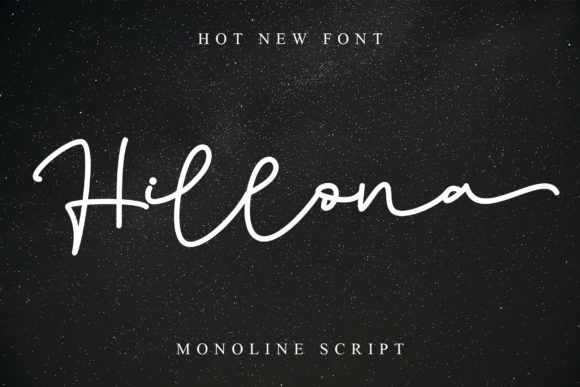
At its core, Hillona is defined by its consistent stroke width, a hallmark of the monoline aesthetic. Unlike calligraphic scripts that mimic the pressure variations of a brush or nib, Hillona maintains a steady line thickness throughout every letterform. This characteristic gives the font a cleaner, more modern appearance. It avoids the sometimes stuffy or overly formal connotations of traditional cursive scripts, making it incredibly versatile for web design and social media graphics.
The visual personality of Hillona is friendly yet sophisticated. It carries a handwritten quality that feels organic and human, which is essential in an era where consumers crave authenticity. However, because it is a premium font, the letterforms are refined. You won't find the jagged edges or inconsistent spacing often associated with free, lower-quality alternatives. The PUA encoding is a critical feature here. For those unfamiliar with the term, PUA (Private Use Areas) encoding means that every glyph, swash, and alternate character is accessible across virtually any software platform, including standard office applications and basic design tools. This removes the technical barrier to entry, allowing you to access those decorative flourishes without needing advanced software knowledge.
Visual Hierarchy and Brand Perception
When you incorporate a script font like Hillona into your layout, you are immediately influencing the visual hierarchy. Because script fonts are inherently decorative, they command attention. This makes Hillona an exceptional display font for headlines, subheadings, and pull quotes. By using Hillona for key focal points and pairing it with a more neutral typeface for body copy, you create a dynamic contrast that guides the reader’s eye.
From a branding perspective, the choice of typography speaks volumes about your business personality. Hillona suggests a brand that is creative, approachable, and detail-oriented. It works beautifully for brands that want to convey a sense of craftsmanship or personal touch. For example, a boutique coffee roaster, a lifestyle blogger, or a high-end stationery shop would find that Hillona aligns perfectly with their values. It tells the audience that you care about aesthetics and quality, without being pretentious.
Real-World Applications: Where Hillona Shines
The true test of any creative font is how it performs in the wild. Hillona’s versatility allows it to adapt to a wide range of projects, from digital interfaces to physical products. Here is a breakdown of practical applications where this typeface excels.
- Logo Design and Brand Identity: A logo design needs to be memorable. Hillona’s fluid lines make it ideal for creating wordmarks that feel distinctive. Because it is a monoline, it scales well, retaining clarity whether it is printed on a business card or embroidered on a polo shirt.
- Packaging Design: In the world of packaging design, shelf appeal is everything. Hillona adds a touch of elegance to product labels, particularly in the beauty, food, and fashion industries. It pairs exceptionally well with minimalist layouts, allowing the script to act as the primary visual anchor.
- Editorial and Publishing: For editorial design, such as magazine headers or book covers, Hillona provides a sophisticated flair. It breaks up the monotony of standard serif and sans-serif layouts, offering readers a visual break that feels refreshing.
- Digital Marketing: In the fast-paced world of social media graphics, stopping the scroll is the goal. Hillona is perfect for Instagram stories, quote cards, and promotional banners. Its readability at medium sizes ensures that your message gets across quickly, while its style keeps the content engaging.
Mastering Font Pairings
One of the most common questions regarding script fonts is what to pair them with. Because Hillona has a distinct personality, it requires a counterpart that complements rather than competes. A general rule of thumb in modern typography is to pair a handwritten font with something structured.
For a clean, professional look, try pairing Hillona with a geometric sans serif font. The simplicity of the sans-serif acts as a neutral canvas, allowing Hillona’s decorative elements to pop. Alternatively, if you are aiming for a more classic or editorial aesthetic, a sturdy serif font can work well. The contrast between the organic flow of the script and the structured rigidity of the serif creates a sophisticated tension that feels very high-end. Always test your pairings in context. View them at different sizes and on different backgrounds to ensure the legibility holds up.
Practical Considerations for Implementation
Before integrating Hillona into your workflow, it is helpful to consider a few practical elements to ensure the best results. While the font is highly versatile, thoughtful application is what separates amateur designs from professional ones.
First, consider the medium. While Hillona is an excellent web design asset, script fonts generally perform best as accents on screens. For mobile devices, ensure that the font size is large enough to be legible on smaller screens. Avoid using Hillona for long paragraphs of body text; it is designed for impact, not for extended reading.
Second, take advantage of the alternates. As mentioned, the PUA encoding allows access to a library of glyphs. Do not settle for the default appearance. Experiment with different capital letters or swashes to customize the look for your specific project. This customization helps avoid the "template" look that can happen when popular fonts are used without modification.
Finally, review the licensing. As a commercial font, Hillona comes with specific terms of use. Ensure that your license covers your intended application, whether it is for a single client project or for use in print-on-demand merchandise. Respecting font licensing is a crucial part of professional practice.
Elevating Your Creative Toolkit
In conclusion, Hillona is more than just a collection of letters; it is a design asset that empowers you to communicate with style and confidence. It solves the common problem of finding a script font that is both beautiful and functional. Whether you are a small business owner designing your own marketing materials or a seasoned designer looking for a fresh addition to your library, Hillona offers the quality and flexibility you need.
By understanding its visual characteristics and applying it strategically, you can enhance your brand identity, improve your visual hierarchy, and create designs that truly connect with your audience. Explore the endless possibilities of Hillona and see how this beautiful monoline script can transform your next project.